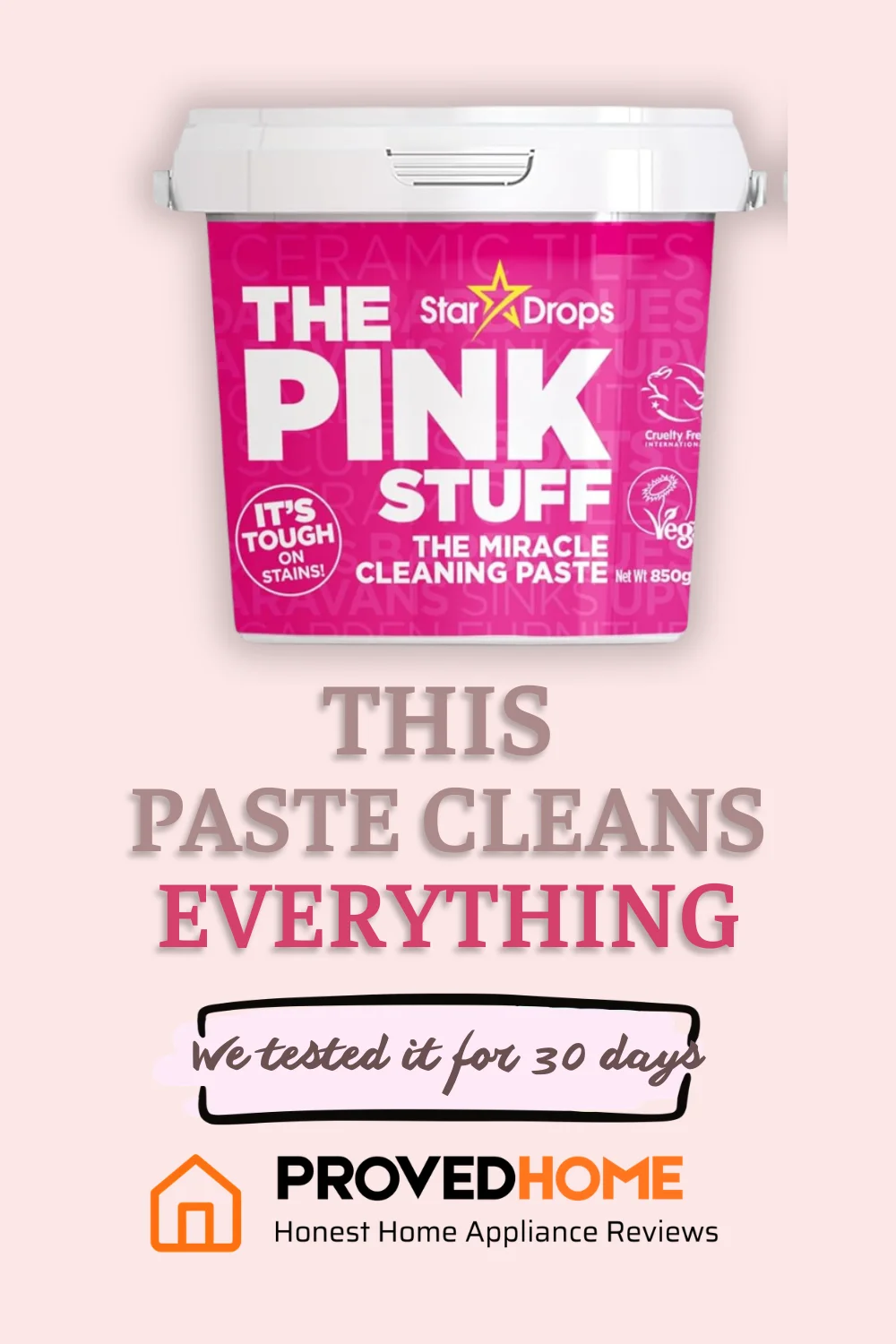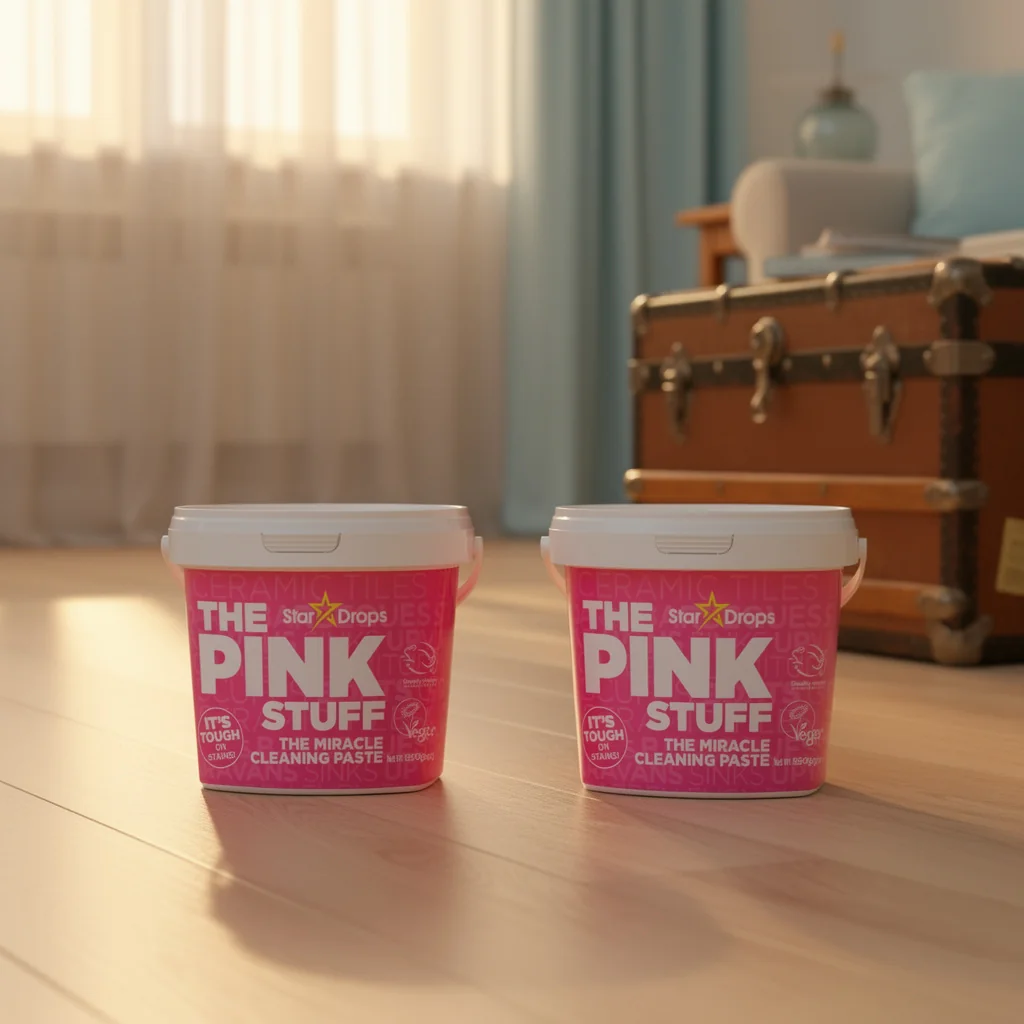
This pink cleaning compound has been hailed as a household miracle so many times across social media that the word has lost all its objective meaning. But here is the uncomfortable truth: this abrasive paste can permanently damage your premium kitchen surfaces if you are not careful, and professional cleaners who handle heavy detailing daily openly state that the bathroom spray variant works better for routine chores. That said, the gritty paste does possess legitimate heavy-duty uses that justify keeping a jar around—you simply need to know exactly where it belongs and where it should never be applied.
I have spent considerable time auditing real owner experiences, tracking video performance tests, and separating the viral social media marketing fluff from actual residential utility. The large 850-gram tub sits at an incredibly accessible price point, making it tempting when you see those satisfying, sped-up before-and-after scrubbing montages online. But the real core question isn’t whether it can scour baked-on grease off an old saucepan. The question is whether it serves as the correct tool for your specific home finishes, or if you are about to micro-scratch an expensive appliance you will deeply regret.
The Numbers That Matter
The manufacturer claims this compound is formulated from 99% natural ingredients, positioning it as an environmentally responsible choice that doesn’t compromise on raw scrubbing grit. The paste is packaged in a generous 850g tub, which translates to roughly 17.63 ounces of product by weight. Verified owners consistently report that a remarkably small dollop goes a long way, meaning a single container easily outlasts standard liquid spray cleaners that you typically burn through in a matter of weeks.
The underlying formulation is inherently abrasive—that is the single most critical key to understanding both its mechanical strengths and its hidden dangers. It is engineered to grind away stubborn dirt, carbonized grease, and hard water stains on saucepans, plumbing taps, ceramic tiles, UPVC window frames, and glass. While the brand has been refining its chemical compounding since 1938, manufacturing longevity does not guarantee safety across every modern interior finish.
As an Amazon Associate, we earn from qualifying purchases. This does not affect our editorial independence or review ratings.
Consumers heavily praise its efficiency on glass shower doors and porcelain basins, with many highlighting the pleasant signature scent as a distinct operational bonus. The mild fruity aroma is a recurring positive theme in community reviews—it completely avoids the harsh, eye-watering chemical fumes associated with traditional industrial scouring powders. But look past the pleasant smell: one commercial cleaning company owner stated bluntly that the physical paste can scratch a wide variety of delicate materials, suggesting that only the liquid bathroom cleaner variant belongs in a professional technician’s daily toolkit.
Real-World Stress Test
The gritty paste truly excels when it confronts polymerizing oils, carbonized oven racks, and industrial-grade grime. Homeowners report utilizing it on interior oven glass doors and cast-iron stovetops with remarkable results, shearing through nasty, layered build-up that standard chemical degreasers leave untouched. One video reviewer applied it across multiple surfaces and found it exceptionally effective on heavy ceramic floor tiles and exterior glass panes, where the mildly abrasive texture lifts away hard water scaling without leaving visual swirl marks—assuming you execute the process correctly.
For ancient, baked-on stains, the correct methodology involves spreading a thin layer over the target zone using a damp micro-fiber cloth or soft sponge, rubbing gently in a circular motion, and then letting it sit undisturbed for five to ten minutes. That waiting window is vital. Rushing the chemical interaction means you will naturally apply more physical muscle strain, which exponentially increases the risk of scratching the underlying surface. I have noticed that owners who skip this chemical soaking stage are almost always the ones complaining about micro-scratches later on.
The paste acts as an excellent polishing compound on outdoor UPVC trim and unlacquered brass taps, stripping away the oxidized layer and mineral crusts that dull fixtures over time. Reddit users found the product remarkably cost-effective given the sheer variety of restoration tasks it can conquer, noting that its multi-surface utility makes it a solid investment.
However, the physical container design remains an absolute annoyance. Because it uses a wide-mouth tub, you are forced to dig your fingers or a sponge directly into the paste, which creates a messy workflow and inevitably wastes product around the rim.
The compound will not perform miracles on every residential material, despite what the internet says. Some buyers expected it to effortlessly clean everything from porous tile grout to polished stainless steel and painted living room walls, only to discover that it either dulled the glossy finish or left permanent scuff marks. The inherently abrasive nature means you must execute a test application on an inconspicuous corner first—a safety step that social media ads completely skip. One independent video tester put the paste through multiple challenges, confirming its raw stain-lifting utility while clearly mapping out where it fails against specialized cleaning agents.
Where It Falls Short
The absolute biggest problem with this gritty formula is the severe risk of surface abrasion, compounded by the fact that the packaging lacks explicit, prominent warnings about what specific materials to avoid. Professional restoration technicians see this catastrophe regularly: the mechanical grit that allows it to easily scour iron and thick porcelain will aggressively scratch soft acrylic tubs, strip away thin electroplated metallic finishes, or permanently dull the protective anti-fingerprint coatings on modern kitchen appliances. Every time you smear it onto an untested surface, you are taking a gamble.
The physical packaging design is another persistent daily headache. Scooping paste out of a shallow tub mid-chore means your hands get coated in pink residue, and transferring the product onto a cleaning tool is inherently inefficient. Shifting the product into a flexible squeeze tube or a pump container would solve this complaint instantly, but the traditional tub packaging remains unchanged. It is a minor design flaw that becomes increasingly irritating when you are trying to move quickly through house chores.
Furthermore, veteran cleaners warn that the product is a poor generalist for standard maintenance cleaning. While marketed as an all-purpose miracle solution, owners quickly realize that dedicated streak-free glass sprays, specialized stainless steel polishes, and targeted alkaline grout cleaners easily outperform this paste in their respective categories. You will find yourself reaching for specialized chemical bottles anyway, which undercuts the overarching financial argument of buying a single catch-all tub. It functions well as a heavy-duty scoring paste, but it cannot act as a complete replacement for your entire cleaning cabinet.
Who Should Actually Buy This
You should purchase this 850g tub if you are dealing with deeply embedded stains, hard water scaling on ceramic tiles, or oxidized metal fixtures that resist standard liquid spray detergents. It is an exceptional value for renters, budget-focused homeowners, or anyone who wants a single, long-lasting scouring abrasive to handle deep kitchen restorations and heavy bathroom build-up. As long as you restrict its use to resilient glass, raw iron, and thick porcelain, the tub delivers excellent return on investment.
Conversely, you should completely avoid this product if your home features extensive natural stone countertops (like marble or granite), delicate brushed stainless steel appliances, or custom painted cabinetry. The gritty formula introduces too much mechanical risk to be used safely on expensive, easily scratched finishes. If you want a zero-thought, grab-and-go cleaner that can be wiped across any surface without a second thought, this paste will eventually cause structural damage.
Commercial cleaners should follow the advice of field veterans and invest in the brand’s liquid bathroom spray variant instead. The paste formulation is simply too slow and carries too much liability for fast-paced professional property management. For residential users, the ideal buyer is someone who handles their own deep cleaning, possesses mostly tile and porcelain infrastructure, and has the patience to let the paste sit for the required five to ten minutes rather than attempting to scrub through stains with brute physical force.
Frequently Asked Questions
1. Does this viral pink cleaning paste actually live up to its reputation?
The compound is highly effective for tackling tough, baked-on stains, carbonized grease, and stubborn mineral deposits within kitchens, bathrooms, and laundry areas. It performs exceptionally well on heavy glass panels, raw cast iron, and vitreous porcelain when used according to the manual. However, it is not a universal solution; the mildly abrasive formula can permanently scuff delicate or polished synthetic finishes if applied with too much force.
2. What are the primary household uses for the 850g tub?
The paste is engineered to mechanical strip away severe grime and scaling from metal saucepans, plumbing taps, glazed ceramic tiles, unpainted UPVC window frames, and glass shower enclosures. It is highly valued for restoring stained oven interiors and sink basins. Because of its abrasive properties, it should always be spot-tested on an unseen area before being applied to highly visible domestic surfaces.
3. What is the correct dwell time for treating severe stains?
For heavily embedded grime or thick grease, you should spread a thin layer of the paste over the target zone using a damp cloth, rub gently to distribute the grit, and then allow the compound to dwell for five to ten minutes. Letting it sit allows the formula to break down the bond of the stain chemically, which significantly reduces the amount of physical scrubbing required and minimizes the risk of scratching your surfaces.