Why I Ended Up Testing Both
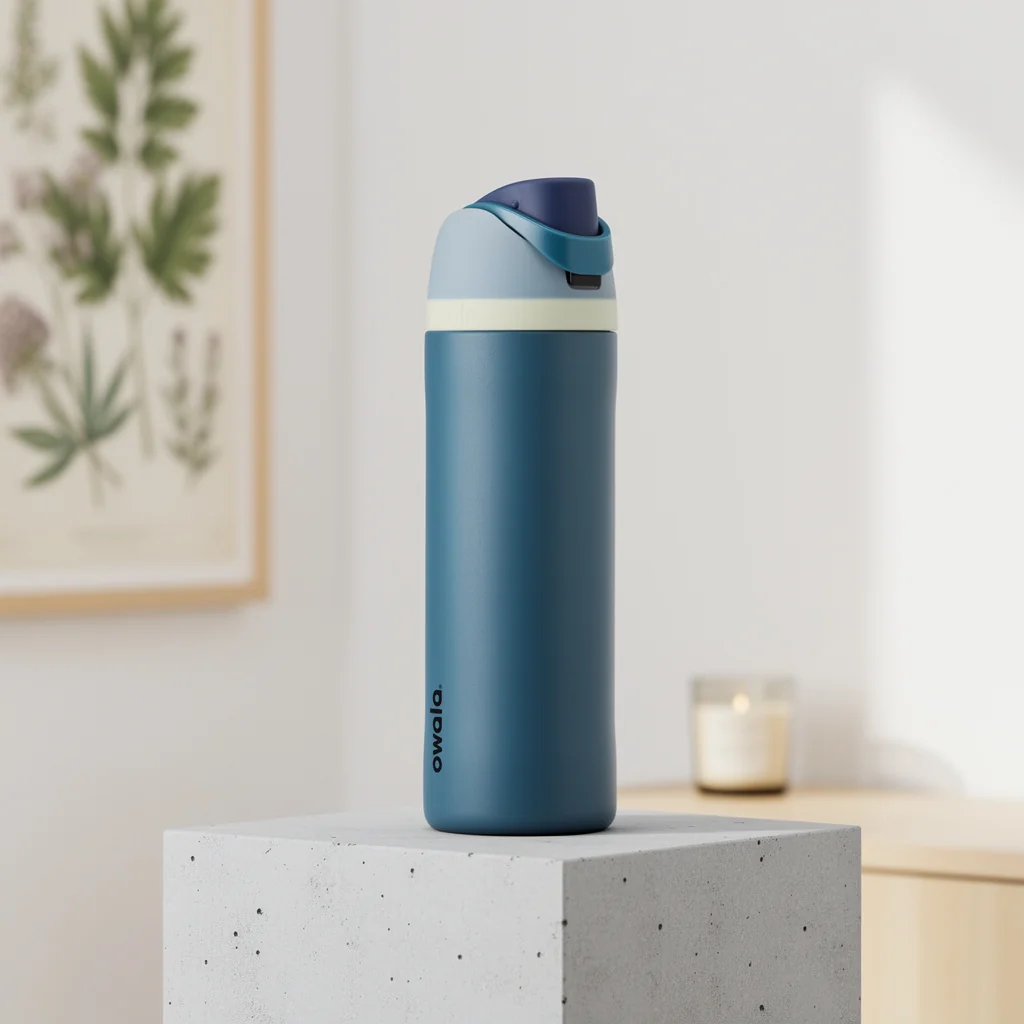
I didn’t plan to become the friend with aggressive opinions about insulated water containers. It happened because my old workplace tumbler started smelling like a wet basement and my teenager kept swiping it for soccer practices. So I bought an Owala FreeSip flask and a Stanley Quencher H2.0 within a few weeks of each other, partly because every group chat I am in held a fierce opinion, and partly because I was genuinely curious whether the viral TikTok hype on the Stanley actually held up next to the quieter, cult-like Reddit adoration for the Owala.
I’ve been rotating both vessels through my daily life for over a year now—handling school pickups, gym bags, weekend road trips, riding along in the center console of my very normal family sedan, and one highly regrettable sandy beach trip where abrasive grit got jammed inside the Stanley’s rotating lid mechanism, forcing me to spend twenty minutes flushing it out. If you are trying to compare these two heavyweights before spending your hard-earned money, this is the raw version a friend would tell you over coffee, not the polished corporate spec sheet.
Quick note before we dig into the details. This site contains affiliate links. If you purchase through our recommendations, we may earn a small commission at no extra cost to you.
The First 30 Days: Real Impressions
The FreeSip comfortably wins the first impression phase. It is noticeably lighter, the dual-function mouthpiece lets you either sip through a vertical internal straw or pop the top back to chug, and that clever metal locking clasp clicks shut so securely that you can drop the flask sideways into a canvas tote without a shred of panic. As one Reddit user put it bluntly in a Stanley vs Owala thread, the internal straw tip is far more comfortable to drink from, and the enclosure is actually leakproof. After a full year of daily hauling, I completely agree—I’ve tossed the vertical flask into my loaded gym bag dozens of times and never suffered a single damp spot.
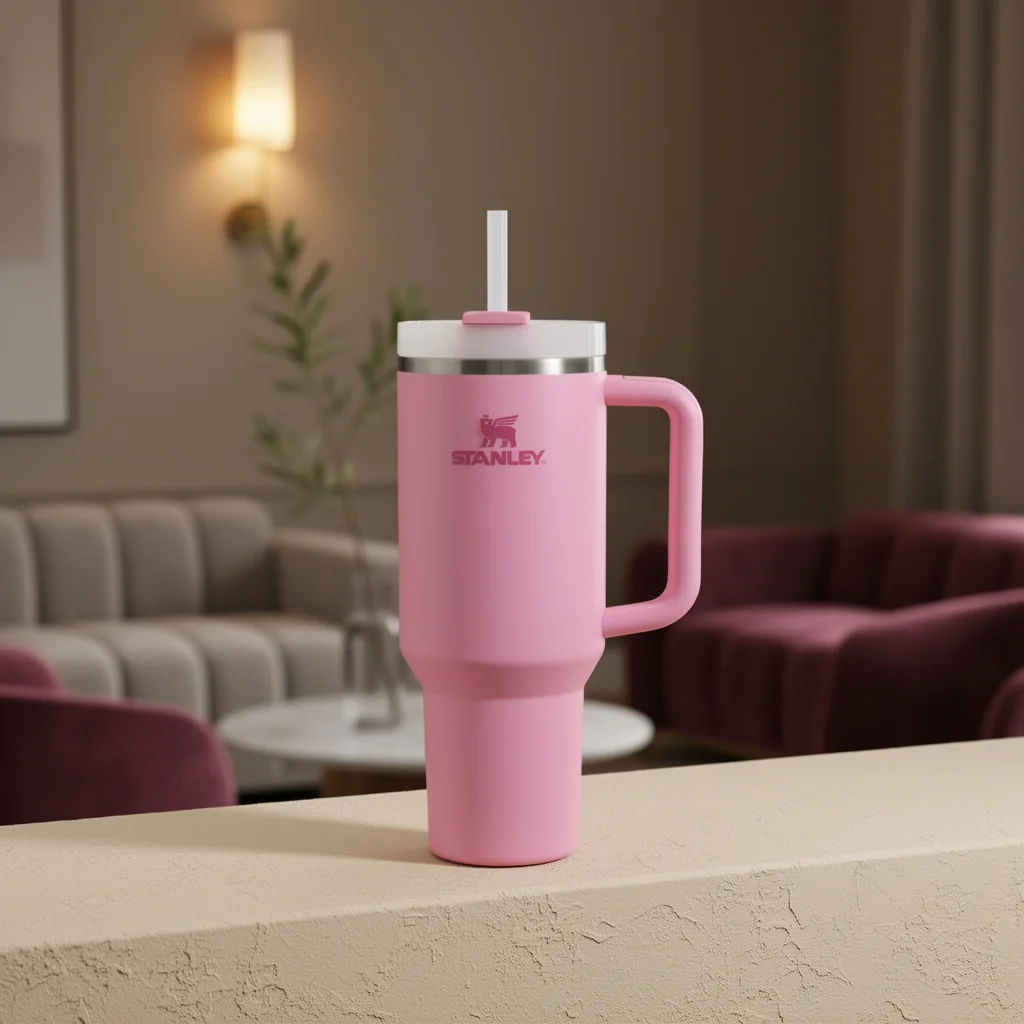
The handled giant feels like an entirely different category of object. It is intentionally heavy, unapologetically tall, and the integrated side handle feels genuinely premium in your grasp. According to engineering specifications, the double-wall vacuum barrier is rated for 9 hours cold and 40 hours iced, and that insulation metric absolutely lives up to the marketing. If you fill the basin with ice cubes at 7 a.m., you will still hear them rattling around during your lunch break. The tapered base fits nicely into standard automotive cup slots, which remains the single biggest reason commuter families keep one around.
However, head-to-head cold retention is much closer than you would expect. Industry search data references a side-by-side overnight temperature test where the triple-insulated walls of the FreeSip preserved ice noticeably better than the double-walled Stanley, though both delivered respectable performance. That data tracks perfectly with my own testing—I’ve left both containers sitting inside my car on blistering 85°F summer afternoons, and the ice inside the Owala outlasted the Stanley by a clean two hours. If I am leaving a beverage inside a hot car for an extended period, I grab the flask. If I am parked at an office desk and simply want a massive volume of ice water within arm’s reach for a full shift, I reach for the handle.
Daily ergonomics, though, is where the structural layout contrast highlights the real differences. An r/HydroHomies commenter accurately described the oversized tumbler as awkward to manage on the move, while the slender flask body felt natural to grip and slid seamlessly into a standard backpack mesh pocket. That evaluation matches my own experience walking the dog, navigating crowded school runs, or trying to cram a container into a compact stroller basket.
The Frustrating Bits Nobody Warns You About
Here is where the marketing polish wears off: the Stanley Quencher is absolutely not leakproof, full stop. Long-term owners on the r/StanleyCups forum have repeatedly demonstrated that even when you slide the FlowState lid to its designated “closed” position with the plastic straw completely removed, it will still weep liquid the exact second the tumbler tilts past a 45-degree angle. Separate community threads flatly point out that the container is never advertised by the company as a fully sealed vessel, meaning that splashing around the straw seal is technically within normal operating parameters. Normal or not, it is incredibly annoying in motion. I have successfully soaked one expensive designer tote and a rear car seat—both times I assumed the top was safe, and both times I was wrong. Lesson learned.
Exterior durability is another common point of frustration. Testing data from Good Housekeeping noted that the heavy tumbler suffered significant structural denting along its bottom rim during standardized drop evaluations, and a popular r/BuyItForLife post details how the powder coating along the base began peeling away within six months of gentle hand washing. My own finish hasn’t peeled off yet, but the lower perimeter has picked up a collection of silver dings and scratches that I don’t remember causing.
The competing flask is not bulletproof either. Dedicated threads on r/Owala flag that while the metal bodies are highly resilient, the structural plastic tops can crack or shatter if the bottle lands directly on its cap from a high surface, and one frustrated parent noted their kids managed to fracture the lids within three days of playground use. There are also isolated consumer reports regarding minor internal rust spots and unhelpful warranty customer service experiences.
Furthermore, editorial teams at the New York Times called the FreeSip lid assembly somewhat finicky to properly sanitize, noting that its entire leakproof integrity relies on a relatively small plastic latch mechanism with no redundant mechanical lock. That clasp has held up fine under my normal handling, but I am certainly not throwing it onto asphalt to stress test it.
A few minor functional annoyances are worth keeping in mind. Only the 24oz size of the flask fits smoothly into a standard automobile cup holder (the 32oz and 40oz variants are too wide), not every internal gasket component is safely dishwasher-compatible, and the tiny removable silicone straw seals are remarkably easy to drop down a busy kitchen sink drain. On the tumbler side, you also have to navigate the legacy 2024 conversation surrounding lead content within the bottom vacuum sealing bead—though forum explanations clarify the lead is completely insulated inside the steel walls and only poses an exposure risk if the outer seal is physically ruptured by structural damage.
Which One Stays in My House?
Both items continue to serve a purpose in my home. But if you are forcing me to pick a definitive winner—the Owala FreeSip represents the superior, more versatile everyday container for the average person. It is lighter to carry, it actually seals airtight, the dual-function mouthpiece is genuinely innovative, and its ultimate cold retention edges past its competitor during brutal overnight trials. I have personally transitioned to using the flask as my primary companion for everything except extended, stationary desk work.
The massive tumbler earns its keep strictly as a stationary companion meant to sit on a kitchen island or a dedicated office desk where its massive volume and comfortable handle shine. Just do not make the mistake of throwing it into a flexible travel bag—I learned that lesson the hard way so you don’t have to.
If you are evaluating them purely on chaos tolerance—handling toddlers, crowded commutes, gym floors, and hurried walks—the FreeSip wins the matchup without much debate.
Frequently Asked Questions
1. Which is better: the Stanley Tumbler or Owala FreeSip?
The choice depends entirely on your lifestyle architecture. The Stanley is the better option if you prioritize a massive capacity, want an integrated side handle for easy lifting, and intend to keep the container vertical on a desk or in a vehicle console. The Owala is the clear winner if you need a lightweight, completely leakproof container that can be tossed carelessly into a backpack or gym bag without creating a mess.
2. Which model keeps water colder for longer periods?
While both utilize high-grade insulation, the triple-wall barrier of the Owala FreeSip slightly outperforms the double-wall vacuum seal of the Stanley during extended temperature retention testing. Side-by-side overnight trials demonstrate that the flask retains its ice core longer when exposed to external heat, though the Stanley still delivers perfectly acceptable cold performance for a standard 9-to-5 workday.
3. What causes the Stanley to leak around the lid?
The leak pattern is a result of the three-position FlowState lid design. Because the top features a rotating plastic dial meant to accommodate a removable straw or a direct sipping slot, it does not form a true hermetic seal. If the vessel tips over or is inverted inside a bag, liquid will freely escape through the straw opening and the rotating gaskets.
4. Are these premium insulated containers actually worth the internet hype?
Yes, both brands deliver structural engineering that far surpasses cheap, single-walled promotional bottles. You are paying a premium for rock-solid temperature control, food-grade 18/8 stainless steel build quality, and highly specialized lid systems. The key to satisfaction is matching the bottle to your specific daily environment—choose Stanley for stationary desk environments and Owala for active travel.