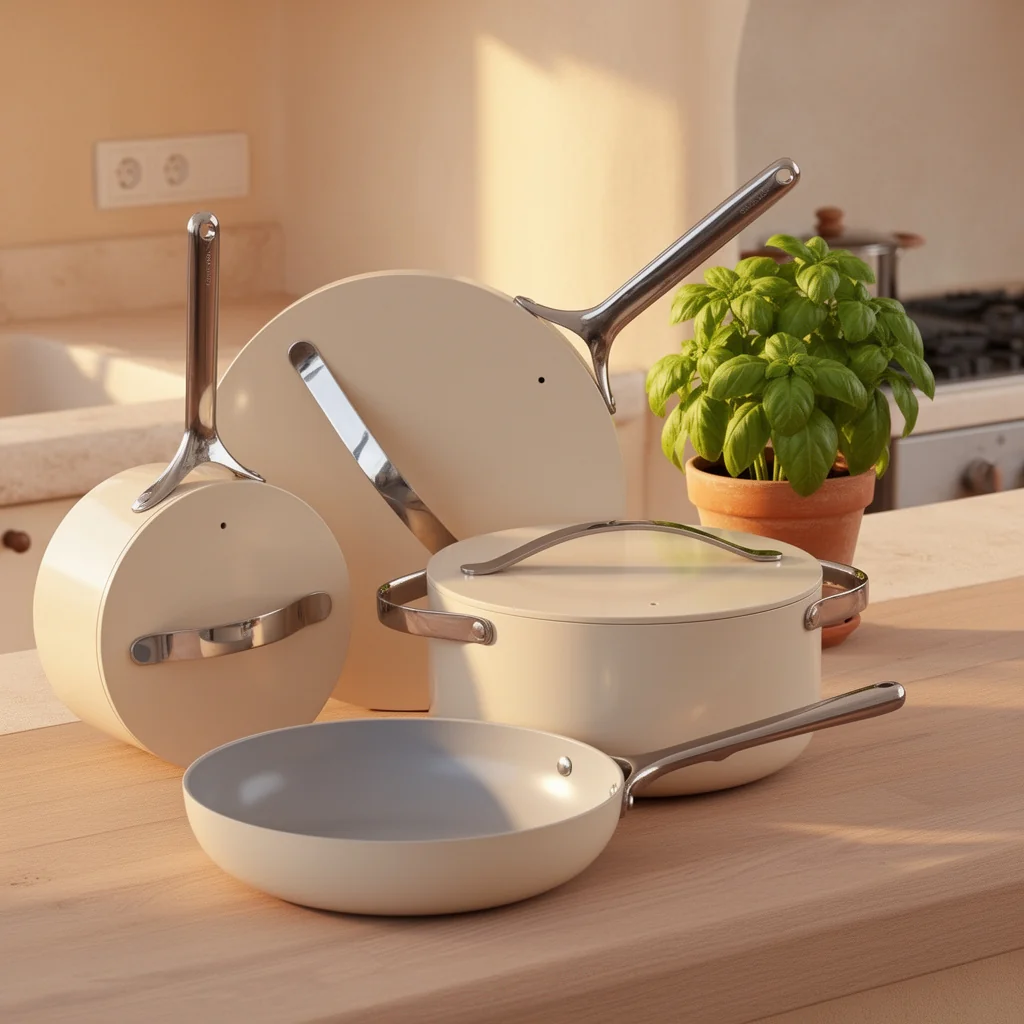
Two trendy ceramic-coated brands. Same non-toxic marketing pitch. Completely different design philosophies. I’ve cooked on both of these systems for over a year now, and here is the honest truth: the choice between the Always Pan 2.0 and Caraway’s ceramic collection comes down to whether you want a singular, clever multi-tool or a full, matched set equipped with custom storage.
After evaluating both options through hundreds of family meals, I can tell you that the glossy lifestyle marketing rarely matches the everyday kitchen reality—and that applies equally to both brands.
Where These Actually Matter
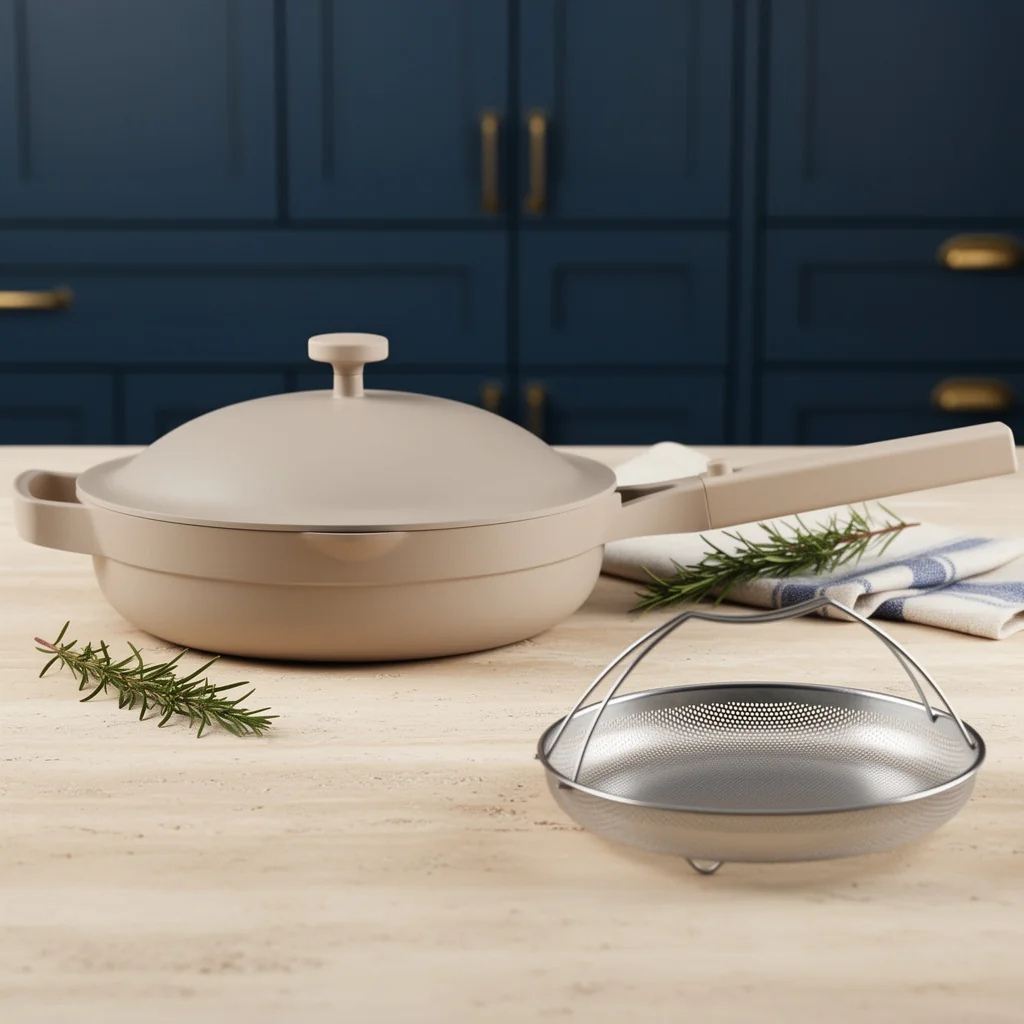
The Always Pan 2.0 is a 10.5-inch, 2.6-quart aluminum vessel featuring a patented 10-in-1 layout. Our Place aggressively pitches this single item as an outright replacement for ten traditional pieces of cookware—claiming it can braise, sear, steam, strain, sauté, fry, boil, bake, roast, and serve. If you reside in a studio apartment or absolutely despise cluttered lower cabinets, that extreme consolidation forms the entire core selling point.
Caraway plays a completely opposite layout game. Instead of one pan, they sell you a coordinated cookware set—consisting of a dedicated fry pan, saucepan, sauté pan, and Dutch oven—with modular magnetic racks and custom hanging lid organizers included right in the box. The storage system is genuinely a standout feature, with reviewers consistently calling it the most well-thought-out part of the package. You aren’t eliminating pieces here; you are organizing a full set much better.
So the primary question to ask yourself isn’t which coating releases eggs better on day one. It’s whether you are looking to replace one multi-purpose workhorse or clear out an entire cabinet drawer of mismatched, warped pots. In my experience, that lifestyle choice matters far more than any minor technical spec sheet rating.
Build Quality and Coating Reality
Both manufacturers utilize ceramic nonstick coatings. Both proudly declare their surfaces are free of PFAS, PTFE, PFOA, lead, and cadmium. Caraway relies on a sol-gel processed, two-layer ceramic system, while Our Place layers its proprietary non-toxic blend over a heavy aluminum core. On paper, the material story is nearly identical—multiple industry teardowns note that these two lines are remarkably similar in baseline performance and construction.
Where they diverge slightly is third-party verification. Consumer Reports ran the Always Pan 2.0 through their rigorous durability testing, swiping a steel wool pad across the cooking surface 2,000 times. It held up respectably well, though it’s worth noting some budget nonstick options actually outscored it on ultimate retention.
Long-term owner reports across forums paint a less flattering picture for both options. Crowdsourced testing shows that while initial nonstick release is stellar, the coating inevitably degrades under regular daily wear. Professional chef reviews are even blunter: if searing power and generational durability are essential to your cooking style, these pretty ceramic finishes are not the correct answer.
The reality of modern kitchen physics is that any ceramic nonstick coating is bound to wear out after a year or two of hard use—and that includes Our Place’s “Always” branding, which I consider highly misleading. Owner feedback consistently indicates that the prime nonstick window lasts between one to two years for frequent cooks. The maintenance rules are tedious for both: low-to-medium stove heat only, soft sponge scrubs, warm water rinses, and an absolute ban on metal utensils.
During my testing, I noticed the Always Pan’s coating began showing its first signs of visual wear around month 8, right in the center where I flip eggs daily. The Caraway sauté pan held onto its slickness slightly longer, but by month 10, food started catching on the surface where the spatula makes frequent contact. Now that I am past the 12-month mark, both require a bit of cooking oil to ensure a clean release.
Ceramic nonstick is fundamentally a consumable asset. Plan your budget accordingly, and don’t let a premium price tag convince you that these will outlive a cheap, replaceable commercial pan.
This site contains affiliate links. If you purchase through our recommendations, we may earn a small commission at no extra cost to you.
Heat, Versatility, Performance
Caraway wins the maximum temperature specification on paper, boasting an oven-safe rating up to 550°F compared to the Always Pan 2.0’s 450°F ceiling. That 100-degree gap is helpful if you like to finish thick steaks under a broiler or bake dense artisan loaves. However, looking closer at owner threads, users are frequently warned that sustained high heat will accelerate coating degradation. Therefore, most savvy cooks keep their burners on medium regardless of what the box claims.
For everyday meal preparation—scrambled eggs, shallow sautés, simmered sauces, or basic one-pan bakes—both options release food cleanly when brand new. The Always Pan’s integrated nesting spatula, modular lid, and custom steamer basket allow you to transition between tasks without grabbing extra tools. Caraway’s individual pieces are more specialized; you wouldn’t attempt to strain pasta directly out of their saucepan, but you also wouldn’t try to sear four large steaks inside the tighter confines of the Always Pan.
Let’s be frank: the “10-in-1” claim is an absolute marketing stretch. While it can technically braise, steam, and strain, attempting to execute all three functions for a single dinner means you are forced to stop and wash the pan between individual steps. In daily practice, it functions like a high-walled sauté pan with a lid—which is highly useful, but certainly not revolutionary.
Compared to heavy-duty alternatives like HexClad or GreenPan that frequently appear in search suggestions, both of these lines sit squarely in the premium lifestyle lane: gorgeous aesthetics, clean material safety, but moderate longevity. If raw, high-heat searing performance is your priority, you should skip ceramic altogether and invest in carbon steel or seasoned cast iron.
The Storage and Design Question
Caraway’s custom storage rack system is the secret weapon of their lineup. The canvas lid holder and magnetic pan dividers genuinely solve the annoying cabinet chaos problem that plagues most kitchens. The first time I slung the magnetic organizers into my cabinet, it solved an organizational headache I didn’t realize I had.
Our Place approaches the storage dilemma through radical subtraction: the strategy is simply to force you to own less equipment. The single pan and its minimal insert pieces occupy just one small corner of a shelf. Both methodologies are valid, but they serve different households. Personally, I lean toward Caraway’s execution—I would always rather have a purpose-built tool for a specific culinary task than a single pan trying to act as a jack-of-all-trades.
Final Verdict
For the vast majority of homeowners looking to overhaul an entire outdated kitchen setup, the Caraway Non-stick Ceramic Cookware Set represents the smarter long-term investment. You receive higher maximum oven flexibility, dedicated pots for specialized cooking tasks, and an organizing system that genuinely cleans up kitchen clutter. Consumer search trends back this up: Caraway is the premium pick when you want a clean ceramic replacement for a conventional cookware set.
Conversely, you should choose the Our Place Always Pan 2.0 if you are working within a highly restricted apartment kitchen, stick primarily to simple one-pan meals, and if the minimalist design matches your actual day-to-day cooking habits. It serves as an excellent standalone piece, but it is not a complete cookware strategy.
Either way, enter the purchase with realistic expectations regarding coating longevity. Neither brand has engineered a permanent bypass to ceramic degradation. Budget to replace them every 18 to 24 months if you cook daily, or three to five years if you are strictly a weekend chef.
Frequently Asked Questions
1. Which is better, Caraway or Our Place?
Caraway is the superior option if you are trying to replace a full, multi-piece conventional cookware set with non-toxic ceramic, as it offers dedicated shapes, a higher oven heat ceiling, and a brilliant built-in rack system. Our Place is the better choice for minimalist cooks, studio apartments, or anyone who strictly wants a single, highly versatile skillet for simple meals. Because both deliver nearly identical nonstick release and material safety scores, the real choice comes down to your kitchen’s storage capacity.
2. Is Caraway ceramic better than traditional non-stick?
Caraway is a ceramic nonstick option, meaning it swaps out traditional PTFE (Teflon) chemistry for a silica-based ceramic gel. While ceramic is widely preferred for material safety—being completely free of PFOA, PFAS, and heavy metals—the structural trade-off is durability. Traditional PTFE coatings will retain their slick release properties significantly longer than any premium ceramic surface under normal cooking conditions.
3. What are the main negatives of Caraway cookware?
According to verified owner feedback, there are three primary drawbacks: the coating is sensitive to high heat (despite the 550°F oven rating, sustained high temperatures ruin the nonstick properties), the manual care instructions are incredibly strict (requiring hand washing, non-abrasive pads, and zero metal utensils), and the slick nonstick layer begins to degrade within 12 to 18 months of daily use. These are universal limitations inherent to ceramic cookware technology rather than defects unique to Caraway.